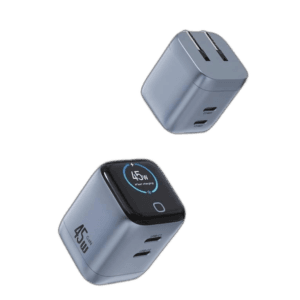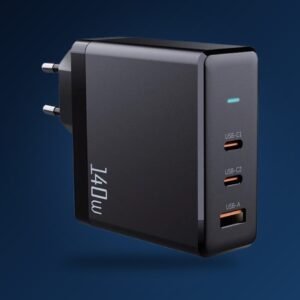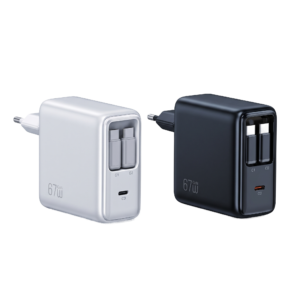
When B2B buyers source custom GaN chargers or power adapters, certifications like CE, FCC, and RoHS are non-negotiable. Among these, passing EMC (Electromagnetic Compatibility) testing is often the biggest hurdle in fast charger R&D.
If you walk into our R&D lab, you might see our latest high-wattage chargers connected to bulky, traditional-looking aluminum-housed or cement resistors. Why do our engineers rely on these simple “fixed loads” instead of highly advanced programmable electronic loads during EMC testing?
Here is a behind-the-scenes look at how a professional USB charger manufacturer ensures pure, compliant power for your OEM/ODM projects.
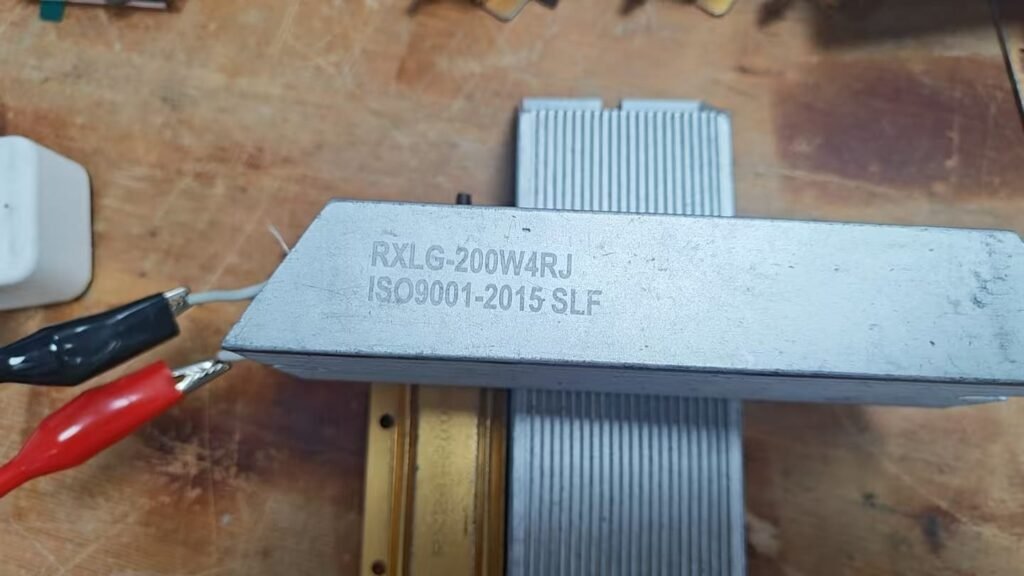
(Above: Our R&D engineers utilizing pure physical fixed resistive loads for uninterrupted, noise-free power adapter testing.)
The Pitfall of Electronic Loads in EMC Testing
In standard aging and performance tests, programmable electronic loads are fantastic. They can simulate various charging protocols and dynamic power draws. However, when it comes to EMC testing, any experienced USB charger manufacturer knows that electronic loads introduce a fatal flaw.
Electronic loads contain active switching circuits, MOSFETs, and their own internal power supplies. When operating, they generate their own high-frequency electromagnetic interference (EMI). If an engineer uses an electronic load to test a charger’s EMC, the EMI receiver will pick up the noise from keduanya the charger and the electronic load. This “dirty” testing environment leads to inaccurate data, making it impossible to determine if the product itself truly meets strict FCC or CE standards.
The Pure Solution for a Leading USB Charger Manufacturer
To get an accurate read on a charger’s true electromagnetic emissions, the testing environment must be completely free of external noise. This is where pure resistive fixed loads (such as high-power RXLG and RX24 wirewound aluminum resistors) come into play for a rigorous USB charger manufacturer.
-
Zero Switching Noise: Unlike electronic loads, pure resistors have no active switching components. They rely on simple physical resistance, converting electrical energy purely into heat.
-
Signal Purity: Because they do not generate any high-frequency noise or harmonic distortion, the EMC testing equipment captures hanya the electromagnetic footprint of the charger itself.
-
High Thermal Tolerance: Our custom 65W, 100W, and 140W GaN chargers output massive power. The trapezoidal aluminum-housed resistors we use are designed with excellent heat dissipation, allowing for stable, continuous maximum-load testing without burning out.
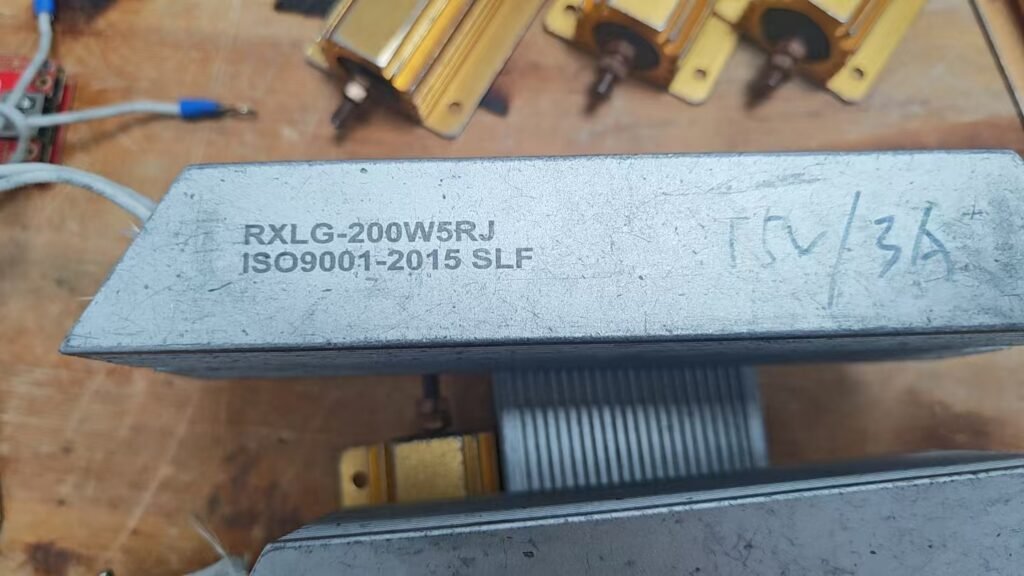
(Above: An RXLG-200W5RJ fixed resistor strictly calibrated for the 15V/3A (45W) charging profile.)
Precision Testing: How a Premium USB Charger Manufacturer Matches Resistance
One of the core principles in our lab is that different power profiles require different resistance values. Modern USB-C PD (Power Delivery) chargers do not just output a single voltage; they dynamically switch between 5V, 9V, 12V, 15V, and 20V profiles.
To accurately test EMC for each specific power tier without introducing noise, our engineers custom-match the fixed resistive loads to the exact output target:
-
For a 45W profile (15V / 3A): We use a specific 5Ω aluminum resistor to match the exact voltage and current target.
-
For a 65W profile (20V / 3.25A): We swap to a precisely calibrated 6Ω golden RX24 resistor.
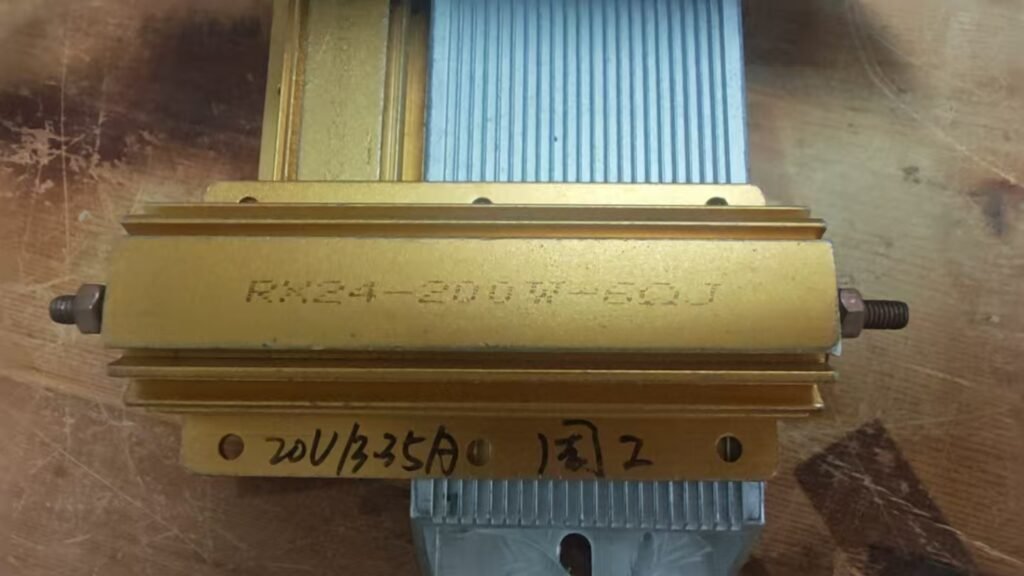
(Above: Our lab specifically assigns a 6Ω resistor (RX24-200W-6ΩJ) to test the 20V/3.25A tier, securing ultimate EMC compliance for 65W outputs.)
Instead of using a “one-size-fits-all” machine, a reliable USB charger manufacturer builds a dedicated physical load matching every single charging tier. This rigorous one-to-one matching ensures that whether your charger is powering a smartphone at 20W or a laptop at 65W, it remains 100% EMC compliant under its exact real-world electrical stress.
Why EMC Compliance Matters When Choosing a USB Charger Manufacturer
For electronics distributors and brands, a product failing customs inspection or facing a recall due to EMC non-compliance is a nightmare.
By utilizing strict fixed-load EMC pre-testing during the EVT (Engineering Verification Test) phase, we identify and eliminate EMI issues at the PCBA layout and transformer design stage. This meticulous R&D protocol ensures that every mass-produced batch strictly adheres to international energy and safety standards, including DOE Level VI efficiency.
Partner with a Reliable USB Charger Manufacturer
Sourcing chargers isn’t just about buying a shell and a circuit board; it’s about investing in the engineering testing behind it. Whether you need KC-certified travel adapters for South Korea, or a reliable OEM for the global market, rigorous lab testing is the foundation of our manufacturing process.
Looking for a reliable Produsen pengisi daya USB for your next fast charger project? Contact our engineering team today to discuss your technical specifications and certification requirements.